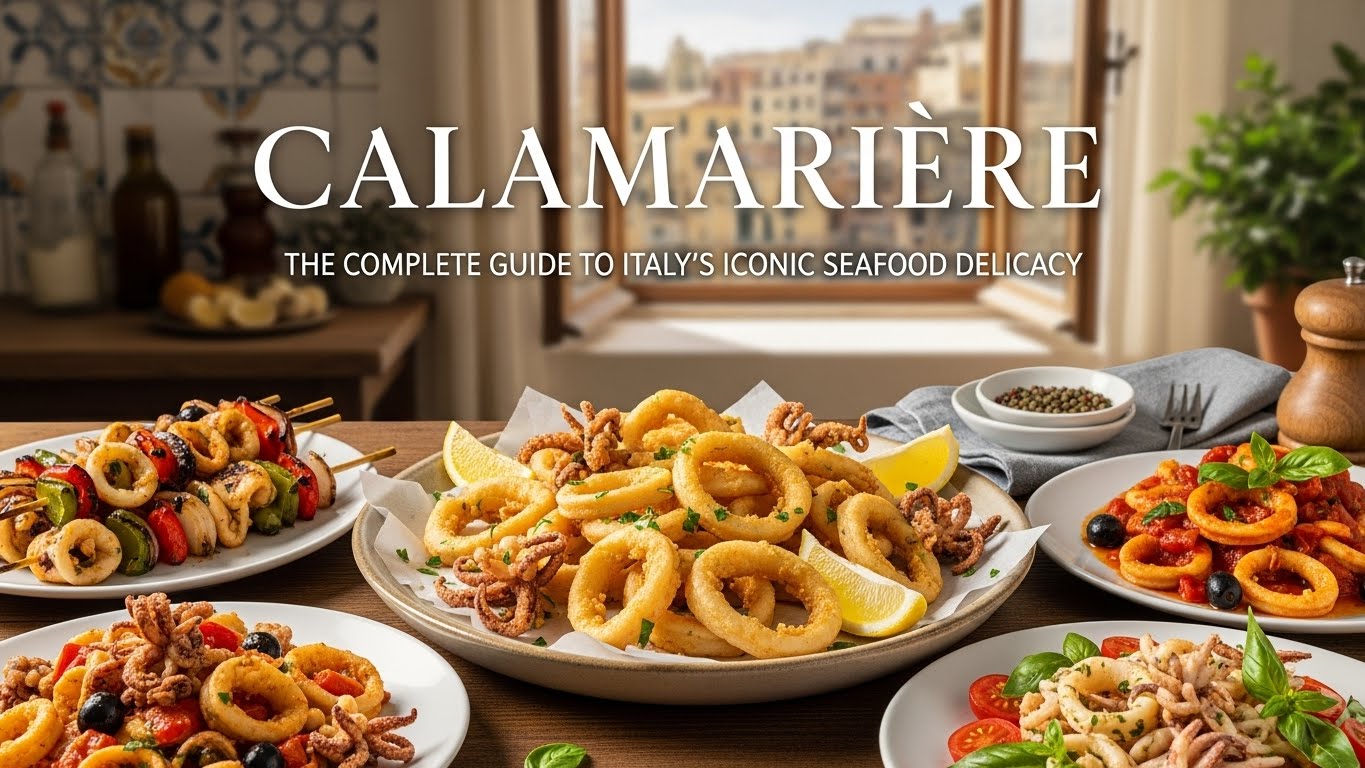
Italian cuisine feels incomplete without seafood, and calamariere stands quietly among its most loved dishes. Coastal towns have served squid this way for generations, not to impress, but to satisfy. Simple preparation, fresh ingredients, and respect for the sea define it.
Travelers often meet calamariere by chance. A small restaurant near the water, a handwritten menu, a plate arriving still warm. The flavors stay subtle, never heavy. That balance explains why the dish continues to appear across Italy, unchanged at its core.
This guide explains what calamariere is, where it comes from, how Italians prepare it, and how people usually enjoy it today.
Origins and Cultural Background
Calamariere developed along Italy’s Mediterranean coast, where squid remained easy to catch and affordable. Fishing communities relied on daily harvests, so meals focused on speed and freshness rather than complex technique.
Early versions used minimal seasoning. Squid reached the pan soon after being cleaned, often fried or grilled within minutes. Families passed these methods down rather than writing them down. Over time, regions shaped the dish according to local tastes.
Trade routes and travel helped spread calamariere inland. Restaurants began offering their own versions, though most still followed the same basic approach. The dish kept its identity because simplicity always remained the goal.
Core Ingredients and Basic Preparation
Fresh squid forms the center of calamariere. Quality matters more than quantity. Markets usually offer whole squid or pre-cleaned rings, both suitable for traditional preparation.
Cleaning involves removing the inner parts and thin outer skin. Careful handling prevents toughness. Some cooks slice the squid into rings, others leave the body whole for stuffing or grilling.
Seasoning stays restrained. Garlic and parsley appear often, sometimes paired with breadcrumbs. Frying remains common, producing a crisp exterior while keeping the inside tender. Grilling offers a lighter option and brings out natural sweetness.
Timing matters more than technique. Overcooking quickly changes texture, so cooks rely on short cooking times and high heat.
Regional Interpretations Across Italy
Italy’s coastline shapes how calamariere appears on the table. Each region adapts it slightly while keeping the foundation intact.
Sicilian versions often include stronger flavors. Capers and olives add sharp contrast and reflect the island’s bold cooking style.
Naples favors tomato-based preparations. A light sauce transforms calamariere into a heartier dish without overwhelming the squid itself.
Northern coastal areas, including Venice, often serve calamariere alongside polenta or risotto. These combinations create a balanced plate with softer textures.
Puglia highlights herbs. Parsley and thyme lift the dish and add fragrance without altering its simplicity.
Regional differences feel natural rather than forced. Each version mirrors local habits rather than trends.
How Calamariere Is Commonly Served
Calamariere rarely arrives alone. Lemon wedges usually sit nearby, ready to brighten each bite. Marinara sauce appears often, especially when the squid is fried.
Fresh salads help balance richness. Arugula or mixed greens dressed lightly in olive oil work well. Garlic bread remains a popular companion, especially when sauce is involved.
Wine choices stay light and crisp. Pinot Grigio and Vermentino match the dish without competing for attention. These pairings keep the focus where it belongs — on the seafood.
Nutritional Profile and Balance
Squid offers high protein without excess calories. That balance makes calamariere satisfying without feeling heavy, especially when grilled or lightly fried.
Omega-3 fatty acids support heart and brain health. Vitamins such as B12 and C contribute to energy and immune function. Minerals like zinc and selenium also play a role in overall wellness.
Preparation style affects nutrition. Lighter methods preserve the dish’s natural benefits while maintaining flavor.
Ordering Calamariere Like a Local
Choosing the right place matters. Smaller trattorias usually handle seafood with more care than tourist-heavy spots. Staff recommendations often lead to the freshest options.
Basic Italian phrases help, though politeness matters more than fluency. Locals value patience at the table. Meals unfold slowly, and calamariere fits that rhythm well.
Taking time to enjoy the dish — rather than rushing — mirrors how Italians experience food daily.
Making Calamariere at Home
Home preparation starts at the fish market. Fresh squid makes the process easier and the result better. Cleaning should stay gentle and unhurried.
A simple flour mixture seasons the squid before frying. Hot oil and short cooking time prevent toughness. Golden color signals readiness.
Lemon, parsley, and a light dipping sauce finish the plate. The result feels familiar yet special, even outside Italy.
Notable Places to Try It in Italy
Naples offers strong examples at Trattoria Da Nennella, where traditional seafood remains central. Sicily’s La Cucina di Riccobene in Palermo highlights freshness and regional flavor. Venice’s Osteria alle Testiere presents a refined interpretation rooted in local tradition.
Trying calamariere in different cities reveals how one dish adapts without losing its identity.
Conclusion
Calamariere represents Italian seafood at its most honest. Fresh squid, careful timing, and restrained seasoning define it. Regional variations add character, yet the dish never strays far from its origins.
Anyone interested in Italian food culture will understand more by tasting calamariere. Whether enjoyed along the coast or prepared at home, it reflects a deep respect for ingredients and tradition.