
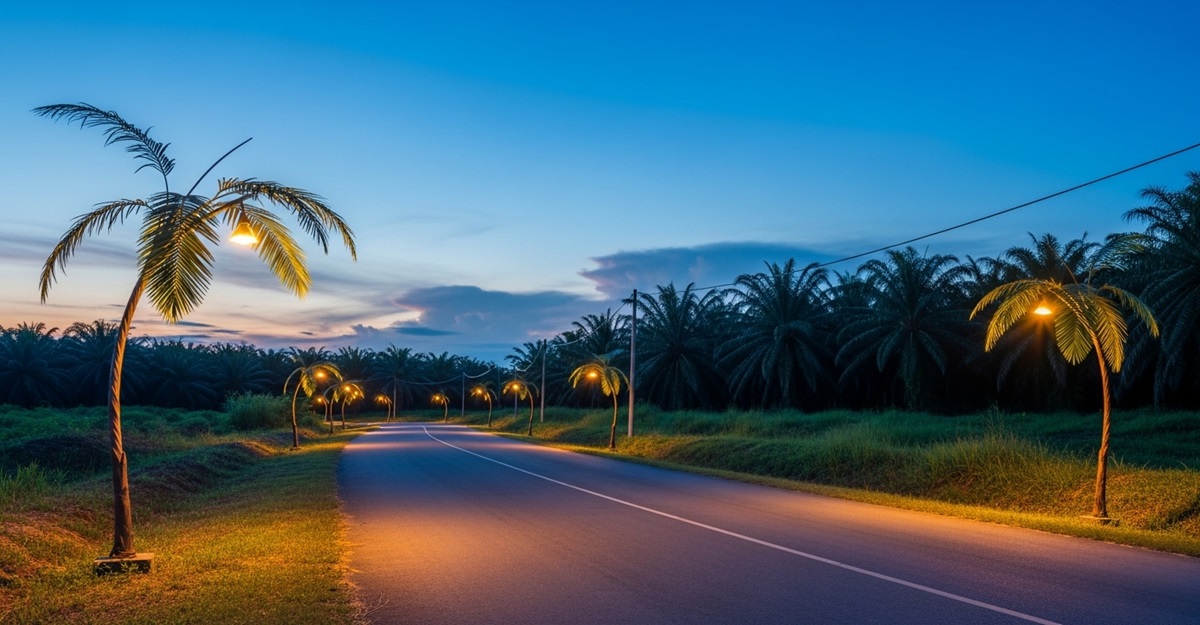
The Oil Palm Lamp Project Street Lamp Oil Palm idea connects street lighting with resources that already exist in oil palm regions. Instead of relying only on grid power or fuel imports, this project approach looks at oil palm waste and sees potential energy. That shift changes how public lighting can work in rural and semi-urban areas where power access remains uncertain.
Street lights serve more than a visual purpose. Roads feel safer, night travel becomes easier, and community life extends beyond daylight hours. Yet many regions struggle to keep lights running every night. This project model responds to that challenge through a simple thought: use what is locally available and turn it into dependable lighting.
The oil palm lamp project does not describe a single product or brand. It refers to a system design that combines oil palm by-products, energy conversion, and street lamp infrastructure. Each part plays a role, and the balance between them decides how well the project performs.
Understanding the Oil Palm Lamp Project
The oil palm lamp project focuses on street lighting powered by energy derived from oil palm waste. Oil palm processing creates materials such as shells, fibers, and empty fruit bunches. These materials often remain underused or become disposal problems. This project model treats them as a resource instead.
Energy from oil palm waste supports outdoor lighting in areas where extending power lines costs too much or remains technically difficult. Street lamps under this system usually rely on efficient lighting units paired with energy storage. The goal stays consistent: steady light through the night without heavy dependence on external power.
Oil palm street lamp projects suit regions with regular oil palm activity. Close proximity between waste sources and lamp installations reduces transport needs and keeps operations practical.
What “Oil Palm Street Lamp” Really Means
The phrase oil palm street lamp often causes confusion. The lamp itself does not consist of palm oil or palm fibers. The structure, pole, and lighting unit resemble other modern street lights. The difference appears in the energy source.
Power comes from processed oil palm by-products. These materials convert into usable energy through established methods. That energy then runs the lighting system directly or charges batteries that supply power after sunset.
Some projects combine oil palm energy with other renewable sources to improve stability. The lamp remains a standard outdoor fixture, while the energy behind it reflects local conditions.
How Oil Palm Street Lamps Work
Oil palm street lamps rely on a chain of steps rather than a single action. Each step affects reliability and output.
Oil palm waste first goes through preparation. Materials need cleaning, drying, or sizing before energy conversion. Proper preparation improves efficiency and reduces system stress.
Next comes energy conversion. The prepared biomass turns into heat or gas, which then produces usable electrical energy. That energy flows into storage units or directly into the lighting system.
Battery storage plays an important role. Stored energy ensures lamps remain lit even when energy generation pauses. The combination of generation and storage keeps lighting steady across long nights and varying conditions.
Oil Palm Biomass Sources
Oil palm processing generates several types of waste suitable for energy use. Shells offer dense material with good energy potential. Fibers contribute additional volume. Empty fruit bunches add bulk and consistency.
Availability depends on harvesting cycles and processing activity. Projects must account for seasonal changes and storage needs. Proper handling keeps material usable and safe for conversion.
Energy Generation and Lighting Output
Energy from oil palm waste supports low-consumption lighting units. Street lamps designed for this setup often use efficient bulbs that require less power to produce adequate brightness.
Energy output planning ensures that lamps meet safety standards without overloading the system. Each lamp’s power requirement affects battery size and conversion capacity. Careful matching prevents outages and extends equipment life.
Hybrid Setups and Added Stability
Some oil palm lamp projects include hybrid designs. Solar panels often join the system to supplement energy supply. Solar input during daylight reduces biomass use and supports battery charging.
Hybrid setups add resilience. Cloudy days or temporary shortages of biomass do not immediately affect lighting. Multiple energy inputs work together rather than compete.
Types of Oil Palm Street Lighting Systems
Oil palm lamp projects appear in different forms depending on local needs and resources. Biomass-based systems rely mainly on solid oil palm waste. These setups usually feature a central processing unit feeding multiple lamps.
Palm-oil-fueled systems use processed oil as fuel. These designs require careful fuel handling and storage but offer consistent output. Hybrid systems combine biomass with solar energy. Many planners prefer this option due to improved reliability and reduced fuel pressure.
Roles and Responsibilities
Successful oil palm lamp projects depend on cooperation among several groups. Local governments handle planning, permissions, and placement. Street lighting remains part of public infrastructure, so oversight matters.
Engineers design systems that fit local conditions. Their work determines energy balance, safety, and long-term performance.
Community members often assist with routine tasks. Waste collection, simple inspections, and reporting issues help keep systems running smoothly.
Why Oil Palm Lamp Projects Matter
Street lighting influences safety, mobility, and economic activity. Areas without reliable lighting face limits after sunset. Oil palm lamp projects address this gap using nearby resources. Regions with oil palm industries already manage large volumes of waste. Turning that waste into energy reduces disposal pressure and creates added value.
This project model also encourages local involvement. Communities gain ownership over lighting systems rather than depending entirely on distant suppliers.
Environmental Advantages
Oil palm lamp projects support better waste use. Instead of open disposal, by-products serve a productive role. Using renewable biomass reduces reliance on fossil fuels. Emissions linked to conventional generators decrease when waste-based energy replaces them.
Better waste handling also improves local conditions. Reduced open burning or dumping benefits air quality and surrounding land.
Economic Considerations
Costs matter for public lighting projects. Oil palm lamp systems reduce fuel transport expenses by using nearby materials. Long-term operation often proves more predictable. Communities understand their waste supply and can plan accordingly.
Jobs may emerge around system upkeep and material handling. These roles support local economies without large external investment.
Social and Safety Impact
Consistent street lighting improves night-time safety. Roads become clearer, and public spaces feel more secure. Local businesses benefit from extended hours. Social activities continue after sunset without added risk.
Community confidence grows when infrastructure meets daily needs reliably.
Planning and Design Factors
Site selection shapes project success. Locations near oil palm processing facilities simplify logistics. Energy demand assessment ensures proper sizing. Overbuilt systems waste resources, while undersized setups lead to outages.
Weather resistance remains essential. Equipment must handle rain, heat, and wind without frequent repair.
Technical Requirements
Energy storage capacity must match nightly usage. Batteries serve as the backbone of consistent lighting. Maintenance planning extends system life. Regular checks prevent small issues from turning into major failures.
Safety standards protect both users and technicians. Electrical and structural guidelines remain essential.
Operational Challenges
Fuel consistency poses a challenge. Moisture levels and storage conditions affect biomass quality. Skill gaps may appear in early stages. Training programs help local teams manage systems confidently.
Scaling projects beyond pilot stages requires coordination. Material supply, maintenance schedules, and monitoring grow more complex as systems expand.
Supporting Equipment
Biomass preparation tools improve efficiency. Proper processing leads to smoother operation. Battery systems stabilize power delivery. Careful selection extends lifespan and reduces replacement frequency.
Control systems allow monitoring and adjustment. Early detection of problems prevents downtime.
Comparison With Other Street Lighting Options
Solar street lights depend heavily on sunlight. Seasonal changes can affect reliability. Grid-powered lamps offer stability but remain costly to extend into remote areas.
Oil palm lamp projects offer independence where oil palm resources exist. Local control reduces reliance on external supply chains.
Practical Steps to Start a Project
Initial assessment reviews waste availability, lighting needs, and budget limits. Installation planning ensures smooth deployment. Clear sequencing reduces delays and errors.
Ongoing review tracks performance and guides adjustments over time.
Conclusion
The Oil Palm Lamp Project Street Lamp Oil Palm concept shows how local resources can support public lighting needs. Oil palm waste, often treated as a challenge, becomes a solution that improves safety, supports communities, and manages resources more wisely. This project model does not replace all lighting options, yet it offers a strong alternative where oil palm activity already shapes the landscape. Thoughtful planning and steady maintenance turn this idea into lasting light.